初三英语试卷
命题人:初三英语备课组
姓名: 班级: 学号: 得分:
选择题(共 55 分)
一、完形填空(共 10 小题;每小题 1分,满分 10 分)
阅读下面短文,从短文后各小题所给的 A、B、C、D四个选项中,选出可以填入空白处的最佳选项。
Once upon a time in a small village, there was a little boy named Tommy. Tommy loved all 1 especially a
tiny bird named Chirpy. Chirpy had beautiful feather (羽毛), and the sweetest song you ever 2 .
One day, Chirpy was caught by a bush( 灌木) . 3 she waved her wings hard, she couldn’t escape. She
could only 4 for help. Luckily, Tommy heard her cry and came running to help her. He 5 moved her tiny feet
from the bush and held her gently. Chirpy felt safe with Tommy and 6 back to her tree happily, singing a
thankful song.
Their friendship didn’t stop here. From that day on, Chirpy often stayed at Tommy’s window and sang for
him. Tommy and Chirpy 7 up together, playing and laughing. As Tommy became a young man, he often
shared his 8 with Chirpy. He wished to protect animals and their homes all his life. Actually, he was doing it
all the time.
The villagers were moved by Tommy’s love for animals. They decided to plant more trees and stop hunting.
Finally, their village became a happy 9 for both humans and animals.
The 10 story shows us that love and care can build a bridge between humans and animals. We can create
a world where everyone can live as good neighbors.
( )1. A. animals B. villagers C. neighbors D. plants
( )2. A. wrote B. ordered C. sang D. heard
( )3. A. If B. Because C. Although D. Until
( )4. A. cry B. sit C. stand D. go
( )5. A. highly B. carefully C. strongly D. closely
( )6. A. ran B. jumped C .flew D. walked
( )7. A. grew B. came C. broke D. got
( )8. A. toys B. regrets C. songs D. dreams
( )9. A. house B. home C. zoo D. school
( )10. A. boring B. relaxing C. touching D. disappointing
二、阅读理解(共两节,20 小题;每小题 2分,满分 40 分)
第一节(共 16 小题;每小题 2分,满分 32 分)
阅读下列短文,从每小题所给的 A、B、C、D四个选项中,选出最佳选项。
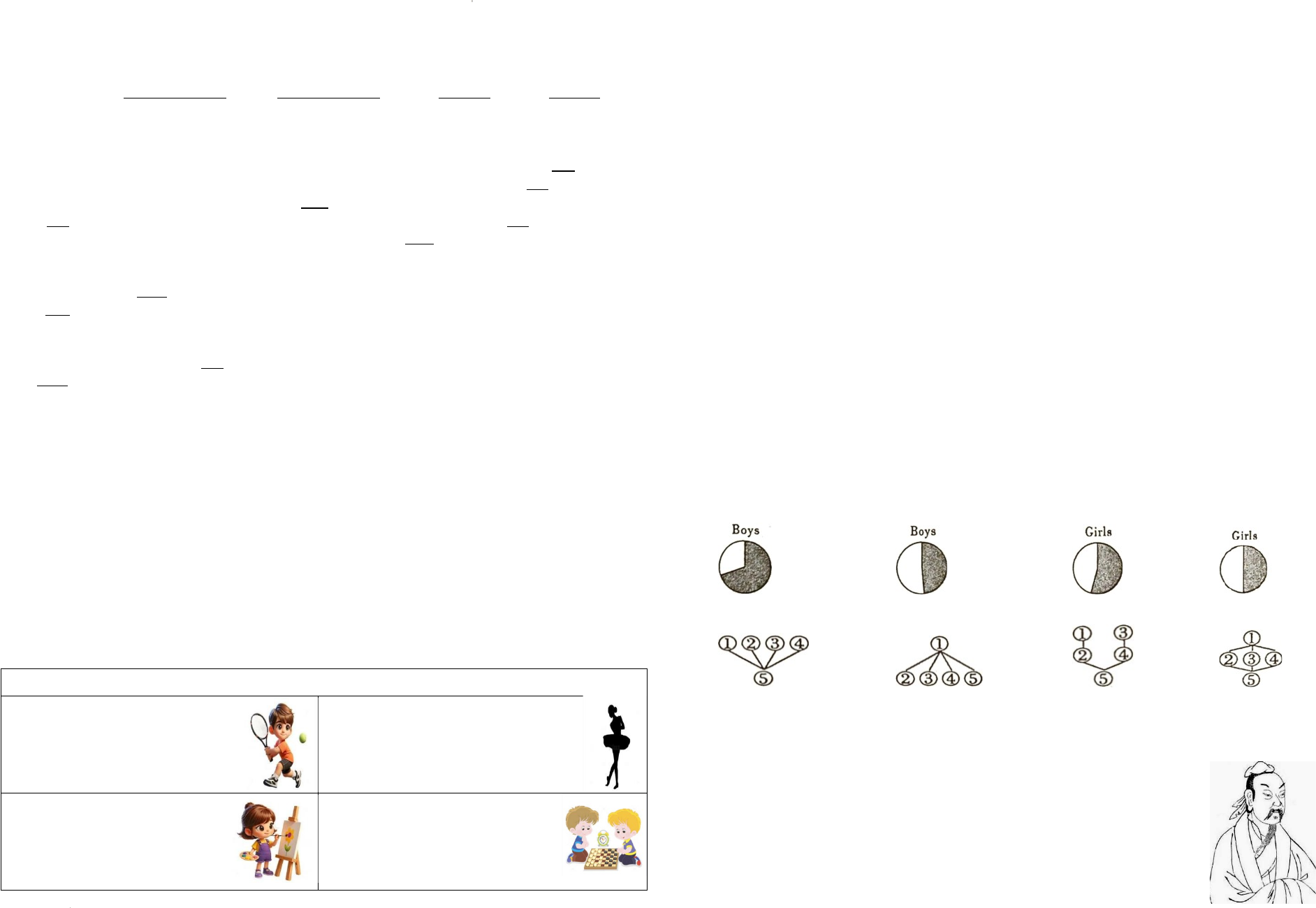
A
After-School Activities
Are you interested in ball games?
Teacher: Mr. Brown
Place: On the playground
Time: Monday, 16:00 -18:00
Age: Over 10 years old
Would you like to be a dancer?
Teacher: Miss Miller
Place: In the gym
Time: Friday, 19:00 - 21:00
Age: Over 5 years old
Are you good at painting?
Teacher: Mr. Green
Place: In the art room
Time: Sunday, 8:00 - 10:00
Age: Over 4 years old, under 14
Do you enjoy playing chess?
Teacher: Mrs. Smith
Place: In the library
Time: Saturday, 15:30 - 18:00
Age: Over 6 years old, under 10
( )11. Cindy is interested in drawing pictures, so she can go to the ________ on Sundays.
A. library. B. art room. C. gym. D. playground.
( )12. David is 11 years old and he likes playing tennis. Who can teach him?
A. Mr. Green. B. Miss Miller. C. Mrs. Smith. D. Mr. Brown.
( )13. Which of the following activities is NOT mentioned in the passage?
A. Dancing. B. Painting. C. Singing. D. Ball games.
( )14. How long does it take Bill to play chess on Saturdays?
A. Two and a half hours. B. One hour and a half. C. Two hours. D. One hour.
B
According to a new research, kids can improve their brainpower by cooking, gardening and cleaning around
the house.
It’s a study of 207 children. Scientists have found that housework like making meals and caring for plants
had something to do with planning, self-controlling and remembering things.
Collected from children aged 5 to 13 in mid-2020, the results showed 86 percent of kids put their dirty
clothes in the right place and cleaned up after playing. But only 59 percent made their own beds, just 26 percent
sorted clothes after washing and 10 percent helped cooking.
Older children are more likely to do housework than younger ones. Girls do more housework than boys. For
example, only 49 percent of boys but 70 percent of girls made their own beds. Around 60 percent of kids,
including 50 percent of boys and 61 percent of girls, helped do the dishes. Only 34 percent of kids aged five to
seven did this, but 64 percent of those aged 11 to 13 helped.
“Children who often cook a family meal may be more likely to be good at other ways of life-like
schoolwork or problem-solving,” the lead researcher of the study, Ms. Tepper said.
( )15. According to the survey, what kind of housework are the children most likely to do?
A. Help cooking. B. Make their own beds. C. Clean up after playing. D. Sort clothes after washing.
( )16. What can we know from Paragraph 4?(■make the bed)
A. B. C. D.
( )17. What is the structure of the text?
A. B. C. D.
( )18. What is the writer’s attitude towards children doing housework?
A. Supportive. B. Worried. C. Doubtful. D. Unclear
C
As we all know, Mencius ( 孟 子 ) was a great thinker and philosopher. Many of
his opinions have a great effect on us today. But he was not born a great man. His
great success owned to (把……归功于) his mother’s influence.
When Mencius was a little boy, his father died, leaving Mencius and his mother
quite poor. One day Mencius returned home from school and found his mother
making some cloth. It was very beautiful and expensive.
“How much of your book have you read today?” Mencius’ mother asked him.
Mencius threw down his book. “I haven’t read any of it,” he replied, “I played with some friends of mine in the
初三英语试卷 第 1 页 共 3 页